Pick a destination by what you want to eat, not what you want to photograph. That is the shift behind food tourism, which, per a Meer English edition report picked up via Google, is becoming a major force in travel, with culinary experiences increasingly shaping where people go and how they explore. By the end of this guide you will know how to build a food-first itinerary and how to dress and pack so you look put-together while you eat your way through it.
The same report points to travelers prioritizing authentic, local, experience-led trips. Food fits that perfectly: it is local by definition, and it gives you a reason to wander into neighborhoods you would otherwise skip.
Start With the Food, Then Pick the Place
Most trips begin with a landmark list and add restaurants around it. Flip that. Choose the dish, the market or the regional tradition that excites you, then build days around it.
A simple way to do it:
- Name the one food you most want to try in the destination.
- Find where it is actually made: a market, a family restaurant, a farm.
- Plan your mornings and evenings around those stops, and let sightseeing fill the gaps.
This keeps your itinerary anchored in something specific instead of a generic checklist.
Build Your Days Around Four Kinds of Stops
The report names markets, restaurants, street food, farms and local traditions as the ways audiences discover a destination through its food. Treat those as your itinerary categories.
Markets
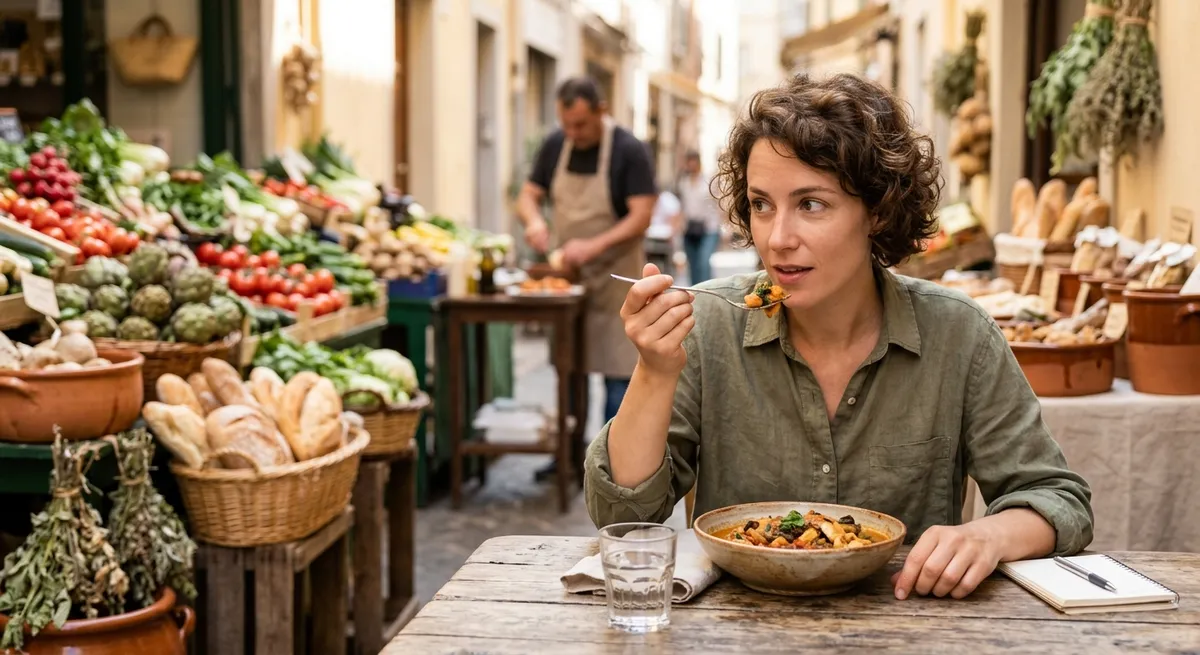
Go early, go hungry, and go with a loose plan. Markets show you what is in season and what locals actually cook with. Walk one full lap before you buy anything.
Street food
The fastest route into a city's flavor. Choose stalls with a steady line, and carry small bills and a pack of wipes.
Restaurants
Book one anchor meal per trip and keep the rest flexible. A single well-chosen sit-down dinner gives the trip a centerpiece without locking up every evening.
Farms and local traditions
If your destination offers a farm visit or a food tradition you can join, give it a half day. It adds context that makes every later meal mean more.
Look for the Experiences Tourists Skip
The easy meals are the ones at the front of every guide. The better ones are usually a few streets over. Ask the person running your hotel, a market vendor or your host where they eat on a normal day, and let one recommendation lead to the next. That chain of local tips is a more reliable guide than any ranked list.
Dress for the Table: A Food-Trip Packing Guide
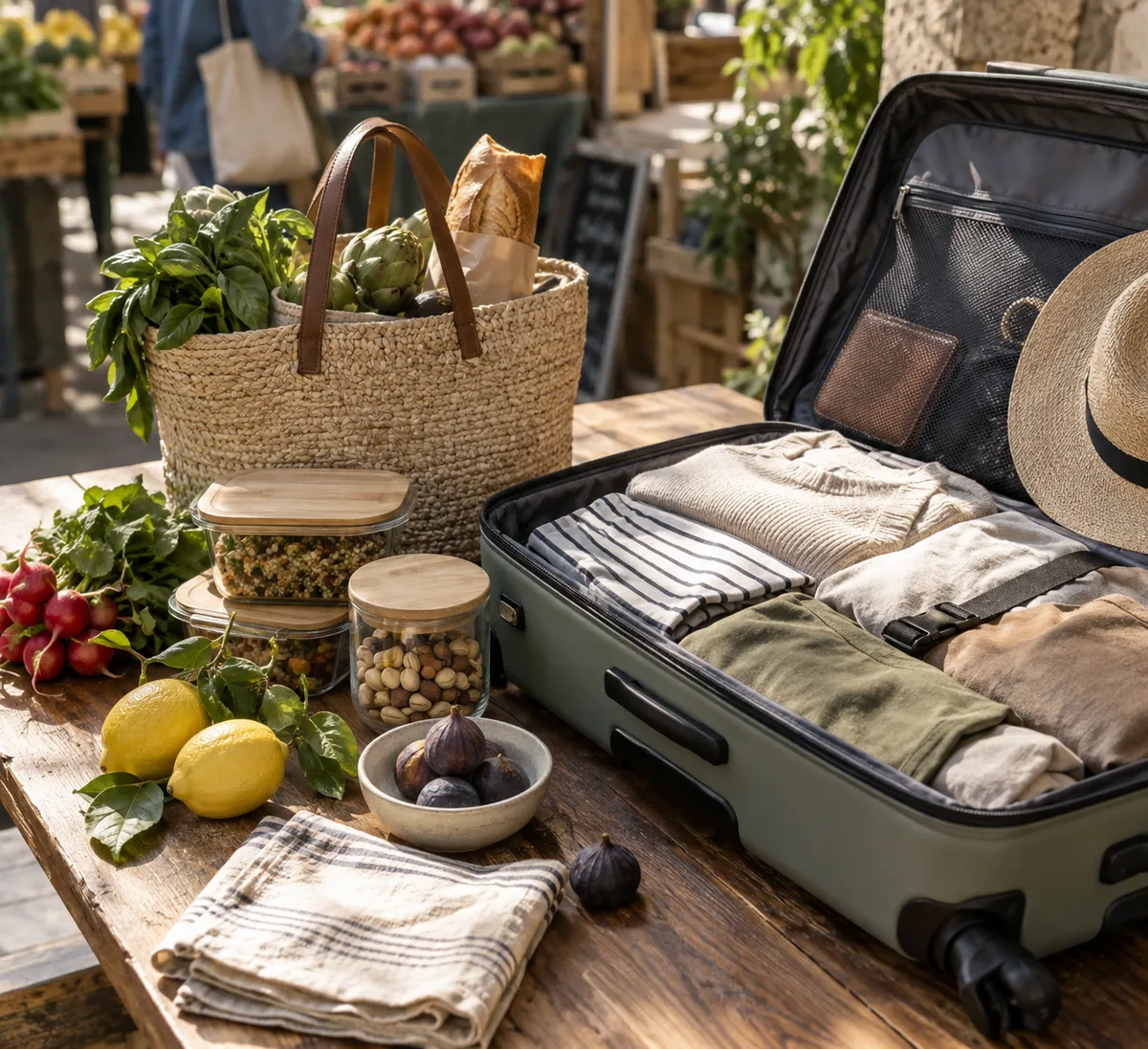
Since you will be eating at stalls, in markets and at dinner tables, your wardrobe has to handle all three. These are practical suggestions rather than reported facts, so adjust to your destination and climate.
- Dark or patterned tops. They forgive drips of sauce and still look sharp in photos.
- Comfortable walking shoes you can style. Market days mean hours on your feet. Clean leather sneakers or low sandals work from morning to dinner.
- A crossbody bag with a zip. Hands stay free for eating, and your valuables stay close in crowds.
- One layer that dresses up. A lightweight blazer or overshirt turns a market outfit into a dinner outfit.
- Stain pen and wipes. Small, cheap, and you will use them.
- Breathable fabrics. Hot kitchens and crowded dining rooms are easier in linen or cotton blends.
A quick beauty pass
Keep face makeup light, since heat and steam from food stalls will break down heavy layers. A tinted SPF, a lip balm with color and a hair clip cover most food-day situations. Pack a mini mouthwash or mints if you are sampling garlic-heavy dishes all day.
Why This Matters Beyond Your Own Trip
The report notes that food is a powerful driver for tourism boards, creators and hospitality brands, and one of its angles is what food tourism means for local communities. Your choices as a traveler are part of that. Eating at locally run stalls and restaurants, buying from market vendors and joining farm or tradition-based experiences puts your spending where the food actually comes from. That is a reasonable rule of thumb, and it also tends to get you the better meal.
Your Next Step
Open a blank note and write down one dish you want to eat on your next trip. Find where it is made, book that stop first, and let the rest of the itinerary grow around it.