
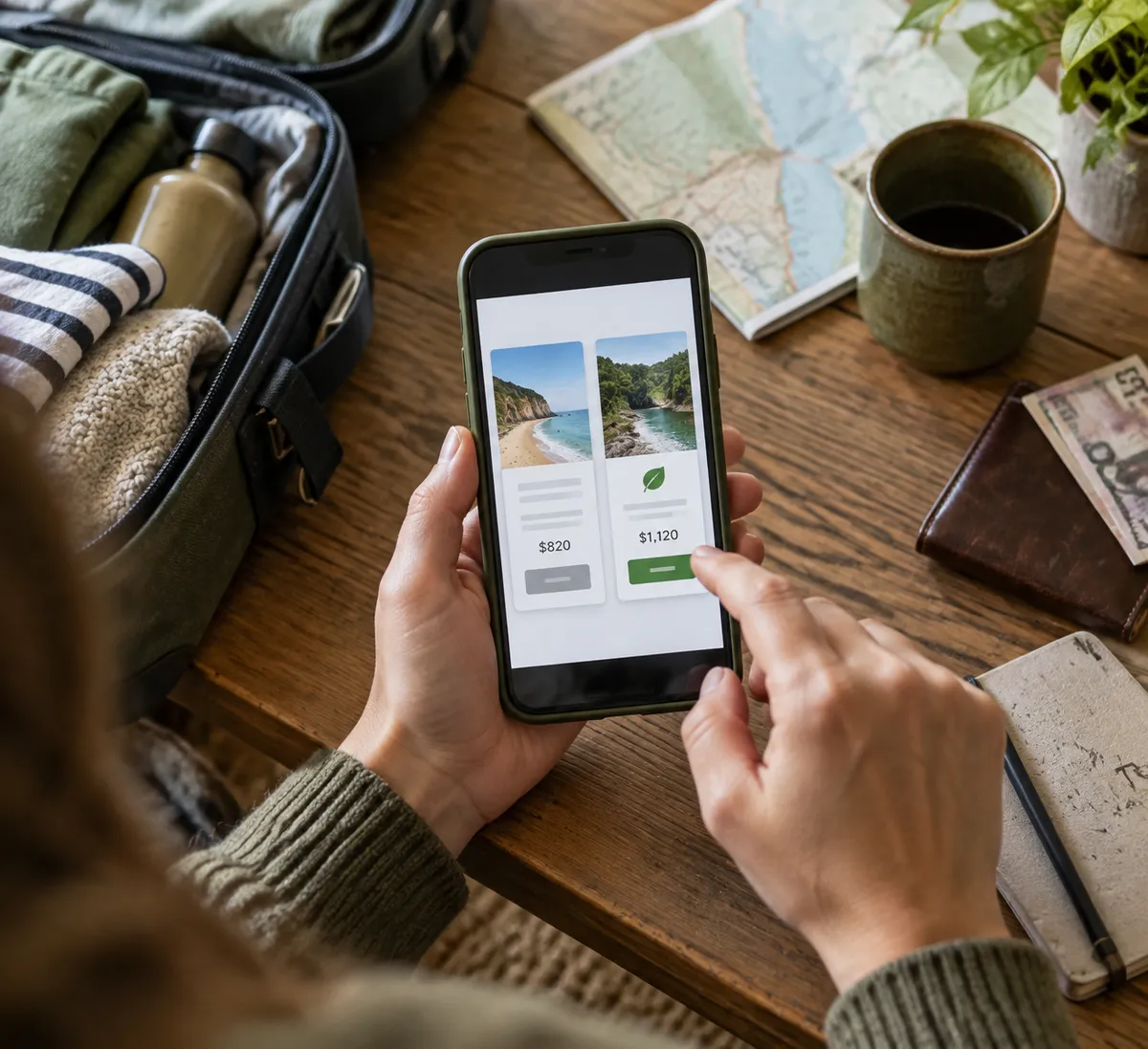
You can care about the planet, pack a reusable bottle, and still click "book" on the cheapest option. You're not alone, and new research explains why. By the end of this piece, you'll have a simple way to make your own greener-travel choices without relying on guilt or vague promises.
What the new research found
Per Phys, a new University of Portsmouth study looked at tourists who value sustainability. The headline finding: those travelers are more likely to support carbon offsets, but many still won't pay extra to make their holidays greener.
In other words, there's a gap between climate concern and what people actually buy. Caring is not the same as spending, and the study suggests travel is a place where that split shows up clearly.
The topic has extra weight right now. Per the report, tourism brands face growing pressure to back up sustainability claims, as scrutiny of greenwashing increases and EU rules tighten around environmental marketing. Travelers are also being asked to trust carbon-offset schemes while questioning whether they truly work.
Why good intentions stall at checkout
The research summary points to three forces colliding: money, trust, and vacation habits. My read on how they play out in real life:
Money feels more immediate than impact
A holiday is often a budgeted treat. An add-on fee for a greener option competes with the hotel upgrade, the nice dinner, or the outfit you've been saving for. The benefit of the fee is abstract. The cost is right there on your screen.
Trust is shaky
If you doubt that an offset does what it claims, paying for it feels like throwing money at a checkbox. That doubt is reasonable, and it's the same one the study says travelers are wrestling with. Skepticism isn't apathy; it can be a rational reason to hold back.
Vacations are habit-driven
Most of us rebook the same kind of trip, the same way. Changing that takes effort, and holidays are when many people want the least friction possible.
A practical filter for your next booking
You don't need to resolve the whole debate to make a better decision. Try this before you pay for anything labeled "green."
1. Ask what exactly you're paying for
A credible offer should say what the money does in plain language. If the description is all adjectives ("eco," "conscious," "planet-friendly") and no specifics, treat it as marketing until proven otherwise.
2. Separate free choices from paid ones
Some greener moves cost nothing, and some save money. Staying longer in one place instead of hopping between several, or packing lighter, doesn't require trusting a scheme. Do these first, then decide whether a paid offset adds anything for you.
3. Set your own green budget before you browse
Decide in advance how much extra you'd spend on sustainability, even if it's small. A number chosen at home, calmly, beats a decision made at checkout when the total has just jumped.
4. Look for clear, checkable claims
With EU rules tightening around environmental marketing, per the report, brands have more reason to be precise. Favor the ones that are. Vague language is a flag; specific language you can verify is a green light.
Packing is the easiest place to start
Since this is a style-and-beauty-minded corner of the internet, here's where the intention-action gap is simplest to close: your suitcase. These choices cost little and need no offset scheme.
- Build a capsule wardrobe. Pick a palette of pieces that mix and match so you carry fewer items and wear each more often.
- Decant, don't duplicate. Transfer the skincare and hair products you already own into travel-size containers instead of buying a new mini set.
- Choose multitasking beauty. A tinted moisturizer with SPF or a cream blush that doubles on lips cuts both clutter and waste.
These won't replace the bigger questions about flights and accommodation, and the study doesn't claim they do. They're simply decisions fully within your control.
What brands should take from this
The Portsmouth finding implies that telling travelers to care more won't change much, because they already care. The gap is in the offer. A sustainable option is more likely to feel worth paying for when it's clear about what it does, credible enough to trust, and easy to add without extra effort. That's my interpretation of the findings rather than a conclusion quoted from the researchers, but it matches the pressure brands are reportedly facing to prove their claims.
The takeaway
Don't wait to feel perfectly convinced by a carbon offset before you act. Before your next trip, write down one free greener choice and one amount you'd happily pay for a credible one, then book with both in hand.