
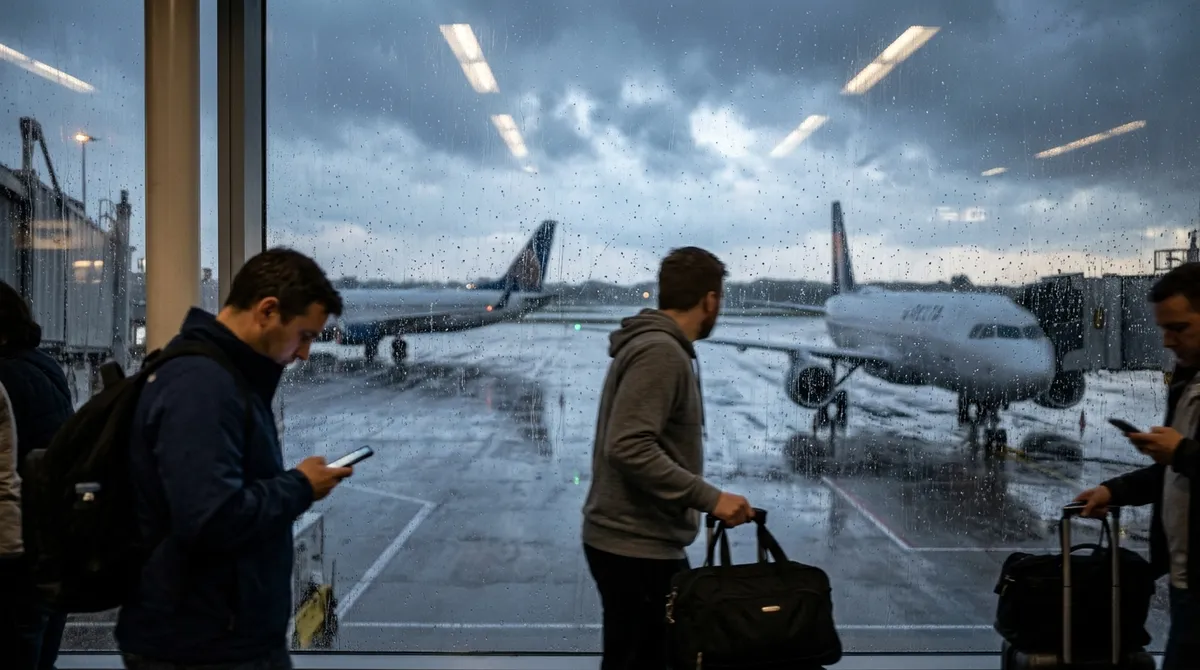
Severe thunderstorms have triggered ground stops, mass delays, and cancellations across New York City-area airports this week. Per reporting from NJ.com, more than 1,904 flights were delayed and 652 canceled amid widespread U.S. travel disruptions. PIX11 reports the FAA issued ground stops at Newark, and the New York Daily News describes the scene as "chaos" across the metro region.
If you're flying through JFK, LaGuardia, or Newark right now — or have a trip booked in the next 48 hours — here's what you need to do, step by step.
Check Your Flight Status Before You Leave Home
The single most important thing you can do is confirm your flight's status before heading to the airport. Showing up to a terminal mid-disruption wastes hours you could spend on the phone with an agent or rebooking online.
Three ways to check in real time:
- Your airline's app — push notifications for gate changes and cancellations go here first, before they hit departure boards.
- FlightAware or FlightRadar24 — both show live departure and arrival data for JFK and surrounding airports, including delay reasons.
- The FAA's Air Traffic Control System Command Center — at fly.faa.gov, you can see active ground stops and delay programs by airport. If a ground stop is listed for JFK or Newark, assume your window is shifting.
Set your airline app to allow notifications right now if you haven't already. During a fast-moving storm disruption, updates can change every 20 minutes.
Understand What a Ground Stop Actually Means for You
A ground stop means the FAA has halted departures to a specific airport, typically because arrival capacity is reduced — often due to weather, as is the case with this week's thunderstorms. Flights already in the air may still land, but outbound flights sit at their origin airports until the stop lifts.
For you as a passenger, a ground stop usually means:
- Your departure time is pushed back by at least 1–3 hours, sometimes more
- If your connection is tight, you may miss it even if your first flight eventually departs
- The airline may proactively cancel the flight if the delay exceeds a certain threshold
Ground stops are considered weather events, which matters for what compensation you're entitled to — more on that below.
What to Do the Moment Your Flight Is Canceled
Don't wait in the customer service line at the airport. That line grows by hundreds of people within minutes of a mass cancellation announcement. Do these three things simultaneously:
Open the airline app and rebook directly. Most major carriers now let you self-service a rebook during irregular operations. You'll often see available alternatives before a phone agent can pull them up.
Call the airline's international number. The domestic 1-800 line will have a two-hour wait. The UK, Canadian, or Australian customer service line for the same airline often connects faster — they handle the same reservations system.
Tweet or DM the airline's support handle. Social media response teams are separate from phone queues and frequently resolve rebooking in under 30 minutes during disruptions.
If you booked through a third-party site like Expedia or Kayak, call the airline directly anyway — the airline controls the seat inventory, not the OTA.
Know What You're Owed (and What You're Not)
Weather cancellations fall into a gray zone for passenger rights. Because the disruption is outside the airline's control, U.S. carriers are not federally required to provide hotel vouchers, meal credits, or compensation beyond rebooking you on the next available flight at no charge.
That said, many airlines voluntarily offer travel waivers during large-scale disruptions like this one. A travel waiver lets you change your flight date — sometimes within a 7-day window — without a change fee. Check your airline's website for a current waiver; they're usually posted on the travel alerts or newsroom page within hours of a major event.
What you are entitled to, regardless of cause:
- A full refund if you choose not to travel (not just a travel credit)
- Rebooking on the next available flight at no added cost
If you paid with a credit card that includes travel protection, check your card benefits — many cover trip delay expenses like meals and hotels when a delay exceeds 6–12 hours, even for weather.
Pack Smart for the Wait
This is where your carry-on decisions matter. If you're already at the airport or heading there, treat an extended weather delay like a 4-6 hour layover you didn't plan for.
- Portable charger, fully charged — departure boards, rebooking apps, and airline calls will drain your phone fast
- Reusable water bottle — airport water costs $6 and you'll be there longer than expected
- One change of clothes accessible in your carry-on — if your checked bag gets routed separately during a rebook, you'll want this
- Any medications you need in the next 24 hours — never check these during a disruption
The travelers who handle weather chaos best are almost always the ones who treated their carry-on like an overnight kit before they left home.
Before Your Next NYC-Area Flight
Storm seasons around New York are real, and JFK, LaGuardia, and Newark sit in one of the country's most disruption-prone air corridors. A few habits protect you every time:
- Book the first flight of the day. Delays cascade — the earlier your flight, the less likely it's been affected by a ripple from the night before.
- Build a 2-hour connection minimum at any NYC airport. Ground stops can add an hour to any inbound flight without warning.
- Screenshot your confirmation, seat assignment, and frequent flyer number before you leave wifi range.
The storm disruption affecting JFK and the region this week is a reminder that the airport experience starts before you leave your house. Check your status now, know your options, and you'll move through this faster than most.